
How to Choose the Right Home Energy Storage System

By Apex Company - 18/01/2026 - 0 comments
Energy storage systems based on lithium iron phosphate (LiFePO₄) batteries have become an essential component of modern energy infrastructure. They allow users to store surplus electricity generated by solar panels or taken from the grid during low-tariff periods and use it later when needed. Choosing the right energy storage solution is critical for achieving maximum efficiency and economic benefit.
The first step is to evaluate the average and peak electricity consumption. For small households, a system with one or two battery modules is often sufficient to provide backup power for essential appliances such as lighting, refrigerators, internet equipment, and small electronics. Larger homes or facilities with higher energy demand may require systems with three or four battery modules.
Another key factor is the required backup duration. If the system is intended mainly to handle short power outages, a smaller storage capacity may be sufficient. However, if the batteries are intended to support nighttime consumption or partial off-grid operation, a larger energy capacity will be necessary.
It is also important to consider inverter compatibility. Modern energy storage systems typically support communication protocols such as CAN or RS485, allowing the inverter to manage charging and discharging processes efficiently. This improves operational safety and helps extend battery lifespan.
A major advantage of modular systems is scalability. Users can start with a smaller configuration and gradually expand the system by adding additional battery modules as their energy needs grow or as their solar installation increases.
Another critical consideration is the battery chemistry. LiFePO₄ technology is widely recognized for its high safety level, long service life (often exceeding 6000 charge cycles), and stable performance across a wide temperature range. These characteristics make it one of the most reliable choices for residential energy storage systems.
In conclusion, selecting the right energy storage system requires analyzing actual electricity consumption, the desired backup time, inverter compatibility, and the possibility of future expansion. A well-designed system ensures reliable power, efficient energy use, and long-term economic benefits.
Blog

The World of ATVs: Selection, Uses, and Safety Guidelines
1. The Essence of an ATV and Its Advantages over Other Vehicles ATV (All-Terrain Vehicle) — is a four-wheeled vehicle designed for navigating rough terrain and off-road conditions. Its main advanta..
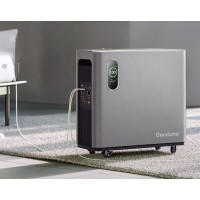
How to Choose the Right Home Energy Storage System
Energy storage systems based on lithium iron phosphate (LiFePO₄) batteries have become an essential component of modern energy infrastructure. They allow users to store surplus electricity generated b..
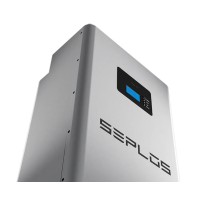
New Product in Our Range — Seplos MASON 280L (30Y) 314Ah
Our power supply systems range now includes a new high-capacity lithium-iron-phosphate battery Seplos MASON 280L (30Y) 314Ah (51.2 V, 314 Ah). It is designed for energy storage systems (ESS), hybrid a..
Featured
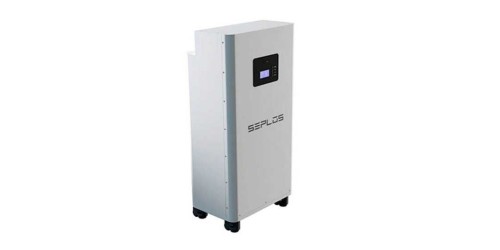
Seplos MASON 280L (30Y) 314Ah Rechargeable Battery
SEPLOS Mason 280L (3.0Y) 314 Ah — 16 kWh Industria..
DJI Mavic 3 Enterprise + Річна страховка (DJI Care)
DJI Mavic 3 Enterprise – a Compact Drone for Speci..
Comments
Write a comment